
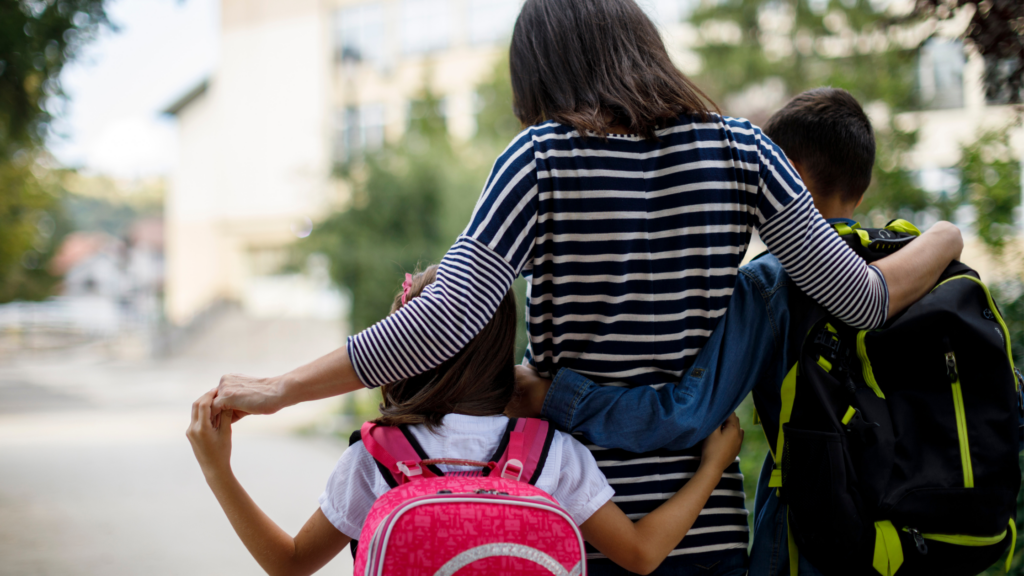
A touch of nervousness before the first day of school is something most of us recognize as a normal part of growing up, and clinicians are well-versed in guiding families through those familiar jitters. What feels different now, and truly merits our renewed attention, is the sheer scale and persistence of anxiety that continues to present itself long after the school year has begun.
The landscape itself has shifted beneath our feet.
Anxiety is no longer a peripheral concern in pediatric primary care; it’s become one of the central ones. A 2025 AAP Periodic Survey, presented at the 2026 Pediatric Academic Societies Annual Meeting, found that 90% of primary care pediatricians reported caring for children with anxiety at least weekly, and a third saw anxious patients daily. Nearly all respondents (97%) agreed that identifying anxiety is now part of their core professional responsibility, and the same share reported actively screening for it during visits (AAP, 2026).
The prevalence data supports the survey’s findings. CDC figures from 2023–2024 put current, diagnosed anxiety at 11% of children ages 3–17, with a notable sex difference (13% of girls versus 10% of boys) (CDC, 2026). A separate analysis of National Survey of Children’s Health data from 2016–2022 found anxiety diagnoses climbing from 6.9% to 10.6% over that period, a steady upward trend, not a pandemic-era spike that has since been resolved (Casseus, 2025). Reporting on a related 2026 JAMA Network Open study found that anxiety diagnoses specifically made during pediatric primary care visits rose roughly 300% over the past decade (JAMA Network Open, 2026).
What the school-transition research adds
Back-to-school anxiety is part of this broader pattern, yet it brings its own distinct challenges. Meeting new teachers, navigating changing friendships, adjusting to heavier academic demands, and letting go of summer’s easy rhythms are all tangible stressors. This is precisely the moment when thoughtful, forward-looking guidance can make a real difference, offering more than simple reassurance.
Encouraging evidence also points to the protective role school can play once the transition settles. A large 2025 study from Harvard T.H. Chan School of Public Health, using difference-in-differences analysis of medical claims across 24 California counties, found that anxiety, depression, and ADHD diagnoses, along with associated healthcare spending, all declined measurably after in-person school reopened following COVID-era closures, with girls showing the largest improvements (Hamad et al., 2025). The takeaway isn’t that school transitions are risk-free; it’s that the structure, routine, and social contact school provides is itself a meaningful mental health input, even though the first weeks of adjustment can look and feel like the opposite.
Where movement fits into the clinical picture
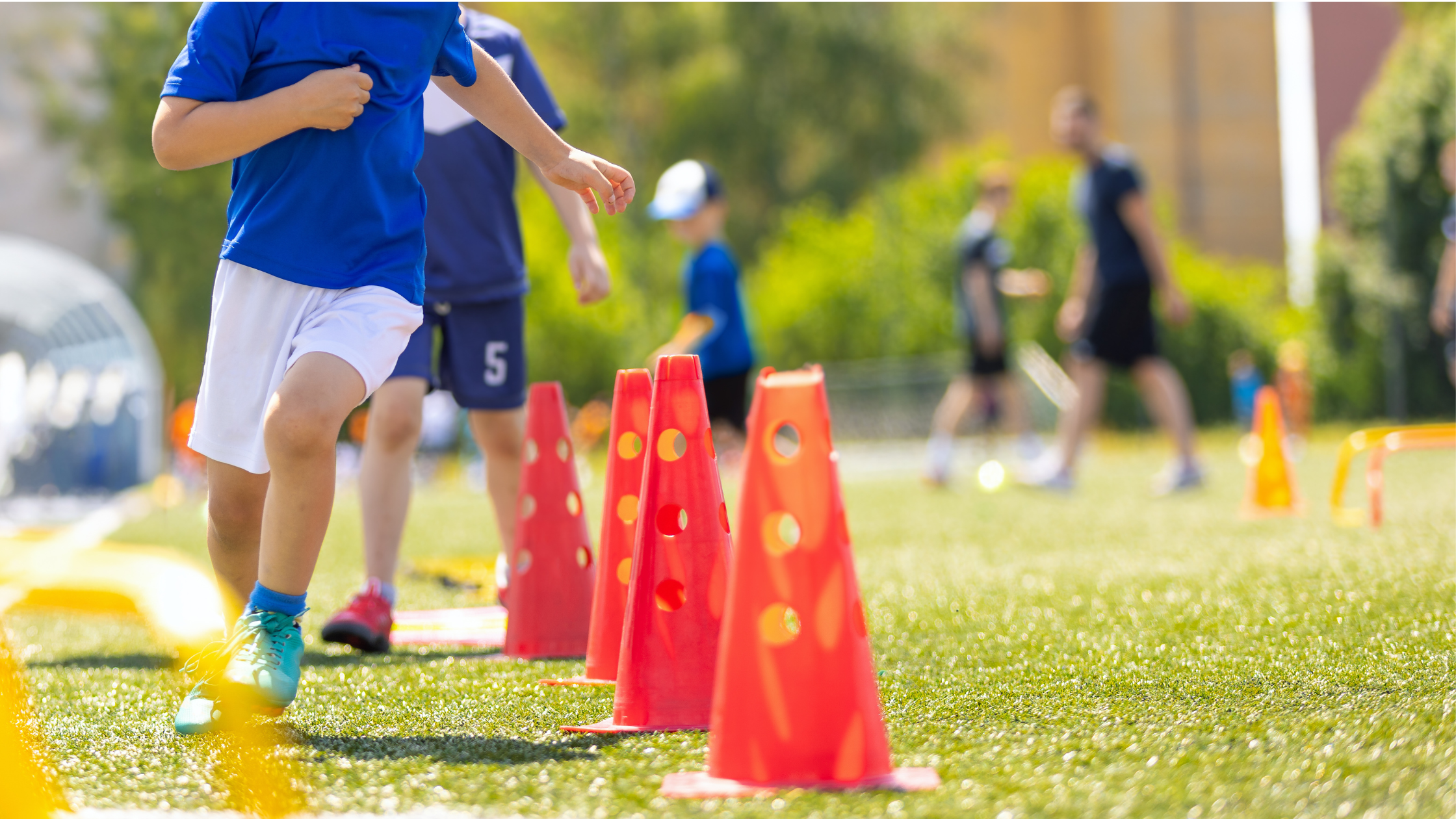
Here, the threads of the season come together. An expanding and increasingly robust body of research in exercise science shows us that physical activity is far more than an optional wellness boost for anxious children; it offers a measurable and meaningful reduction in anxiety.
A 2025 systematic review and meta-analysis in Frontiers in Public Health, covering 19 randomized controlled trials and over 2,000 children and adolescents, found that aerobic exercise significantly reduced anxiety symptoms (SMD = −0.32, 95% CI: −0.60 to −0.03, p < 0.00001), with a larger effect on depressive symptoms (Song et al., 2025). A separate 2025 systematic review and meta-analysis of randomized trials, published in the Scandinavian Journal of Medicine & Science in Sports, reinforced this: elevated anxiety affects an estimated 10–20% of U.S. children and adolescents annually, and structured exercise training showed a consistent, significant reduction in anxiety symptoms across trials (Ligon et al., 2025). A 2026 dose-response meta-analysis went a step further, finding that anxiolytic effects were significantly larger when exercise met American College of Sports Medicine frequency guidelines (at least three sessions per week) and used combined exercise modalities. In other words, this is not a gentle suggestion to be set aside. For many children struggling with anxiety, a thoughtfully designed exercise routine stands as a genuine, evidence-based intervention, rather than a mere distraction, functions as an evidence-supported intervention, not just a distraction technique.
Practical takeaways for the back-to-school visit
- Normalize these feelings without diminishing their significance. A certain amount of apprehension is both expected and adaptive. The real clinical art this season lies in discerning when anxiety is following a healthy course, and when it signals a pattern that calls for more focused support.
- Screen proactively, not just reactively. With the majority of pediatricians now screening for anxiety at visits, back-to-school check-ups are a natural, low-friction point to ask directly rather than waiting for a crisis presentation.
- It is time to reimagine exercise as a core part of the anxiety management toolkit, especially for those with mild to moderate symptoms. The evidence now strongly supports regular, structured activity three times a week or more, ideally combining different forms of movement as a true adjunct to care, not simply a general wellness tip.
- Pay close attention to the timeline. If anxiety lingers beyond the first few weeks, rather than settling as routines take hold, this is a clearer sign that a referral may be needed, more so than distress that appears only in the earliest days.
- Be mindful of access. Given the well-known shortages of mental health providers, offering families a practical, actionable first step such as a specific activity recommendation can empower them to begin supporting their child while waiting for further care.
- Consider the gut–brain axis as another avenue of support. Emerging research into psychobiotics is opening another interesting avenue for supporting children experiencing stress, anxiety, and difficulties with emotional regulation. In children with neurodevelopmental conditions, PS128 has been studied for its potential effects on anxiety and ADHD-related symptoms, including inattention, hyperactivity, and impulsivity (Liu et al., 2019). Multibiotics Mind, for example, contains the psychobiotic strain Lactobacillus plantarum PS128 alongside phosphatidylserine, with PS128 having been investigated for its effects on the gut–brain axis, stress response, mood, and neurodevelopmental symptoms. For children struggling with anxiety, attention, or the demands of returning to school, clinicians may consider discussing an appropriate psychobiotic alongside established lifestyle and clinical interventions, while making clear that supplementation should complement, not replace, assessment and evidence-based treatment.
References
American Academy of Pediatrics. (2026). AAP survey: Anxiety, depression a core part of care, but pediatricians face barriers. AAP News.
Casseus, M. (2025). Anxiety, depression, and behavioral problems among US children and adolescents, 2016–2022. Infant and Child Development.
Centers for Disease Control and Prevention. (2026). Data and statistics on children’s mental health.
Hamad, R., et al. (2025). Effect of school reopenings on children’s mental health during COVID-19: quasi-experimental evidence from California. Epidemiology.
JAMA Network Open. (2026). Pediatric primary care visits with mental health needs. JAMA Network Open.
Ligon, G., Crombie, K. M., Herring, M. P., O’Connor, P. J., & Fedewa, M. V. (2025). The effect of exercise training on anxiety symptoms in children and adolescents: a systematic review and meta-analysis of randomized trials. Scandinavian Journal of Medicine & Science in Sports, 35(9), e70137.
Song, H., Ge, S., Wang, Y., Ran, L., & Zhang, H. (2025). Aerobic exercise strategies for anxiety and depression among children and adolescents: a systematic review and meta-analysis. Frontiers in Public Health, 13, 1555029.
Frontiers in Physiology. (2026). Effects of exercise based on ACSM recommendations on anxiety in children and adolescents: a meta-analysis of randomized controlled trials—Frontiers in Physiology, 16, 1744254.
Effects of Lactobacillus plantarum PS128 on Children with Autism Spectrum Disorder in Taiwan: A Randomized, Double-Blind, Placebo-Controlled Trial. Nutrients, 11(4), 820. DOI: 10.3390/nu11040820.